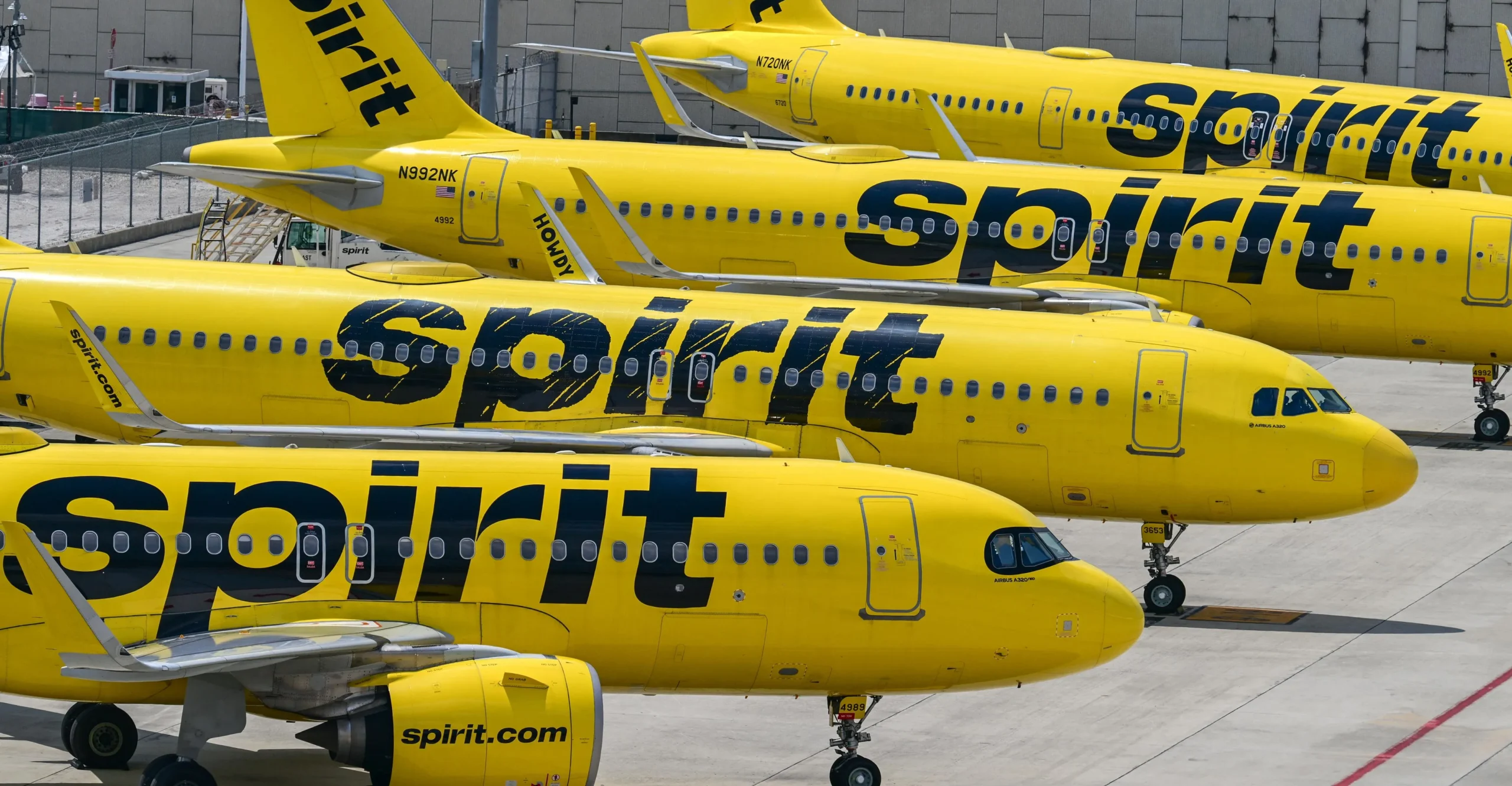
There’s a particular silence that settles over an airport gate when something has gone permanently wrong.
Travelers showed up at Fort Lauderdale-Hollywood International Airport on the morning of Saturday, May 2, 2026 — luggage in hand, boarding passes printed, vacations and business trips and family visits planned around their bright yellow Spirit Airlines flights. The kiosks were covered. The gates were dark. The departure boards displayed cascading rows of canceled flights with no rebooking options, no customer service representatives, no replacement aircraft.
Spirit Aviation Holdings Inc. — the Dania Beach-headquartered budget carrier that had spent more than three decades transforming American air travel through ultra-low-cost flying — had ceased operations entirely at 3 a.m. that morning.
For Florida specifically, the implications go beyond the immediate disruption to travelers stranded at airports. Spirit, based in South Florida, had been under mounting financial pressure for years. The airline employed thousands of South Florida workers directly and supported thousands more indirectly. It anchored substantial flight capacity at Fort Lauderdale-Hollywood International Airport, Orlando International Airport, Tampa International Airport, and Florida airports across the state. Its absence affects Florida tourism, business travel, family connections to Latin America and the Caribbean, and the broader airfare environment that has defined how Florida travelers move for more than a decade.
What Actually Happened: The Final Weeks
The collapse of Spirit Airlines didn’t happen overnight, but the final weeks unfolded with remarkable speed.
The Two Bankruptcies
Spirit had filed for Chapter 11 protection in November 2024 after losing more than $2.5 billion since the start of 2020. The first bankruptcy reflected accumulated pressures that had been building since the pandemic — operational challenges, debt service obligations, growing competition from legacy carriers offering basic economy fares, and the broader transformation of the budget travel market.
The budget carrier sought bankruptcy protection again in August 2025, when it reported having $8.1 billion in debts and $8.6 billion in assets. The second filing reflected that the operational improvements and financial restructuring of the first bankruptcy hadn’t been sufficient to address the airline’s fundamental challenges.
The Final Crisis
The proximate trigger of the collapse was the geopolitical disruption to fuel markets. Spirit, based in South Florida, had been under mounting financial pressure due to the war in Iran, which sent the price of jet fuel soaring.
Spirit incurred nearly $100 million in incremental fuel costs between March and April 30 — a devastating expense increase for an airline operating on the thin margins inherent to the ultra-low-cost model.
Spirit attorney Marshall Huebner said in court that rising jet fuel costs since the U.S. and Israel launched strikes on Iran “engulfed Spirit entirely.” The fuel cost surge rapidly drained the liquidity Spirit had been counting on to support its restructuring efforts.
The Failed Bailout
In the final weeks, the Trump administration considered intervening. Spirit had been seeking a $500 million federal bailout from the White House. The talks reportedly progressed to an advanced stage. An attorney for Spirit told a bankruptcy court that the airline was in “very advanced discussions” with the Trump administration on a rescue package. But a key group of creditors rejected that plan, blocking a deal that would have given the federal government majority control of the airline’s shares.
The Trump administration had considered a government bailout for the cash-strapped business to keep it from going under, but a deal was not reached. Of the potential bailout, Duffy said “we often times don’t have half a billion dollars laying around.”
The Final Hours
Spirit ceased operations around 3 a.m. Saturday so that none of its planes would be in the air and all crew who were away from bases had sufficient time to make hotel accommodations. The final Spirit flight — a routing from Detroit Metropolitan Airport to Dallas-Fort Worth International Airport — landed in the early morning hours.
Spirit said in a statement: “We are proud of the impact of our ultra-low-cost model on the industry over the last 34 years and had hoped to serve our guests for many years to come. It is with great disappointment that on May 2, 2026, Spirit Airlines started an orderly wind-down of our operations, effective immediately.”
Brian’s Take: Spirit’s Collapse Represents the End of an Era for American Budget Air Travel.
The collapse of Spirit Airlines isn’t just the failure of a single company — it’s the end of a particular era in American aviation that fundamentally reshaped how millions of people traveled for more than three decades. Whether you loved Spirit or hated it, the airline democratized air travel for millions of Americans who otherwise couldn’t have afforded to fly, and its absence will leave a real hole in the broader travel ecosystem. For Florida specifically, where Spirit was headquartered and where so many of its routes anchored Florida tourism and family travel, the implications extend across virtually every aspect of how Floridians and Florida visitors have moved for the past generation.
— Brian
The Scale of the Collapse
To understand the significance for Florida and the broader American travel market, the scale of Spirit’s collapse deserves attention.
Workforce Impact
The decision will put 17,000 workers out of a job, including 14,000 Spirit employees and thousands of contractors and other people whose jobs depend on Spirit.
For Florida specifically, this represents a substantial direct economic impact. Spirit’s headquarters operations in Dania Beach (Broward County), along with substantial operational presence at Fort Lauderdale-Hollywood International Airport and other Florida airports, anchored thousands of South Florida jobs across pilots, flight attendants, mechanics, gate agents, customer service representatives, corporate employees, and supporting positions.
The Association of Flight Attendants-CWA (AFA) — which represents 5,500 Spirit Airlines flight attendants — has been advocating for federal support for affected workers.
Daily Passenger Volume
Spirit employed about 17,000 people and carried about 50,000 passengers on its final day of operations.
Multiplied across the year, Spirit was moving millions of passengers across its network — a substantial portion of whom were traveling to, from, or within Florida.
Fleet and Asset Scale
The airline had 59 Airbus A320s in service and 63 in storage, as well as 37 of the larger A321s in service, and 13 of them in storage. Spirit’s fleet of 114 Airbus A320-family planes represented substantial capacity now removed from the broader American airline system.
Historical Significance
Spirit is the first major US airline in 25 years to go out of business because of financial problems. The last comparable American airline collapse occurred in the wake of 9/11 and the early 2000s industry restructuring. The 25-year gap reflects how unusual major American airline failures have become — and how significant Spirit’s collapse is in the broader history of American aviation.
What This Means for Florida Travelers
The immediate and ongoing implications for Florida travelers cross multiple dimensions.
Stranded Passengers and Refund Process
Travelers with Spirit tickets in hand on the morning of May 2 found themselves stranded. Customers with Spirit tickets will be issued refunds, and they have been instructed to rebook travel on other carriers.
The major American airlines responded to help affected passengers. American Airlines, JetBlue Airways, Southwest Airlines, United Airlines and others said they have flown tens of thousands of Spirit customers who were stranded by the collapse.
The refund situation differs based on payment method. Customers who paid with credit cards generally have stronger consumer protections than those who used vouchers or rewards points. Customers who booked flights using any other method, including a voucher, credit or Free Spirit points, may be out of luck. Companies that go out of business typically stop honoring rewards, coupons and vouchers after they cease operations. Spirit said potential refunds of those payment methods will be determined in the company’s bankruptcy court process.
For Florida travelers with Spirit reservations for future dates, the situation requires immediate attention — checking with credit card companies about refund processes, evaluating travel insurance coverage, and rebooking on alternative carriers.
Capacity Reduction and Fare Implications
The removal of Spirit’s capacity from the American aviation system will have meaningful effects on airfares and availability — particularly for routes where Spirit competed aggressively.
“You do not have to fly a small carrier in order to benefit from its presence, because they will bring down the big guys’ fares,” said William McGee, a senior fellow at the American Economic Liberties Project. Without Spirit flying those routes, he predicted that “everyone will be paying more.”
For Florida travelers — particularly those flying budget routes between Florida airports and major Northeast, Midwest, and Latin American destinations — the absence of Spirit’s competitive pressure will likely produce noticeable airfare increases over time as the market adjusts.
Routes Most Affected
Spirit had built substantial route networks connecting Florida to:
- Major Northeast markets including New York metropolitan airports, Boston, Philadelphia, and Hartford
- Midwest destinations including Chicago, Detroit, Cleveland, and Minneapolis
- Latin American and Caribbean destinations including substantial routes to Colombia, the Dominican Republic, Honduras, El Salvador, Mexico, and various Caribbean islands
- Other domestic markets across the United States
The absence of these Spirit-operated routes will affect both the price and availability of travel between Florida and these destinations.
Latin American and Caribbean Travel Impact
For Florida’s substantial Latin American and Caribbean traveling community — including South Florida residents traveling to home countries, family visits, and business travel — Spirit’s collapse has particular significance. The airline had built substantial route networks serving these communities at fare points that legacy carriers often couldn’t match.
The transition to alternative carriers serving these routes — including American Airlines, JetBlue, Frontier Airlines, Avianca, Copa Airlines, and various other carriers — will involve different fare structures, route networks, and service offerings that Florida travelers will need to navigate.
Brian’s Take: The Cost Implications for Florida Travelers Will Develop Over Months Rather Than Weeks.
The immediate scramble for stranded Spirit passengers will resolve over the coming weeks, but the longer-term cost implications for Florida travelers will develop over months as competing airlines adjust their pricing strategies in markets where Spirit’s competitive pressure has now disappeared. Florida travelers should expect that routes where Spirit had been a major competitor — particularly Florida-Northeast, Florida-Midwest, and Florida-Latin America connections — will likely see meaningful fare increases as the market adjusts. Building those increases into travel planning, considering alternative airports when feasible, and watching competitive responses from JetBlue, Frontier, and other carriers will all matter for Florida travelers managing the transition.
— Brian
The Florida Airport Implications
Different Florida airports will experience the Spirit collapse differently based on the scale of Spirit’s operations at each.
Fort Lauderdale-Hollywood International Airport
Fort Lauderdale was Spirit’s home base airport — the airline operated substantial gate space, ground operations, and route networks from FLL. The capacity reduction at FLL is the most significant of any single Florida airport.
The implications include:
- Substantial gate availability that other carriers will likely seek to acquire
- Direct employment impact on FLL workers connected to Spirit operations
- Route reduction on routes where Spirit was the primary or significant operator
- Competitive response opportunities for JetBlue (which has substantial FLL operations), Southwest, Frontier, and other carriers
- Long-term strategic positioning as airlines reposition their FLL networks
Orlando International Airport
Orlando was one of Spirit’s most significant Florida operations beyond Fort Lauderdale, supporting substantial leisure travel routes connecting Orlando’s tourism economy to budget travelers across the country.
The implications for Orlando include:
- Tourism economy impact as some budget travelers may not be able to afford alternative airfare
- Theme park visitor patterns potentially affected by the changing airfare environment
- Capacity adjustments as competing airlines respond to the available market
- Route network changes affecting which destinations connect to Orlando
Tampa International Airport
Tampa hosted substantial Spirit operations supporting both leisure and business travel.
Other Florida Airports
Spirit also served:
- Miami International Airport with limited but meaningful operations
- Fort Myers (Southwest Florida International Airport) with substantial leisure-oriented service
- Jacksonville International Airport with various route connections
- Orlando-Sanford International Airport historically with substantial operations
Each airport faces distinct adjustments based on the specific scale of Spirit operations and the competitive responses from alternative carriers.
The Broader Florida Tourism Economy Implications
Florida’s enormous tourism economy — generating tens of billions in annual economic impact across hospitality, attractions, dining, transportation, and broader visitor services — depends substantially on accessible air travel for domestic and international visitors.
Visitor Volume Considerations
The capacity reduction in Florida air service may produce reductions in total visitor volume, particularly among price-sensitive leisure travelers who depended on Spirit’s ultra-low-cost positioning to make Florida vacations affordable.
Visitor Composition Changes
The absence of Spirit’s distinctive customer base — tending to skew toward budget-conscious leisure travelers and Latin American/Caribbean family travelers — may produce shifts in the composition of Florida visitors.
Spending Patterns
Even if total visitor volume holds, changes in visitor composition may affect spending patterns at Florida hotels, attractions, restaurants, and broader tourism businesses.
Industry Adjustments
Florida tourism businesses will likely need to adjust marketing, pricing, and operational strategies to reflect the changing visitor profile that emerges as the post-Spirit market settles.
Long-Term Industry Adjustments
Across multiple seasons, Florida tourism marketing organizations, individual businesses, and broader industry stakeholders will continue adjusting to the post-Spirit reality.
What Comes Next: The Liquidation Process
The Spirit liquidation will unfold over months rather than days.
The Court-Approved Wind-Down
U.S. Bankruptcy Judge Sean Lane authorized the airline’s plan for a rapid wind down of its remaining business activities, clearing the way for Spirit to move forward with liquidation.
The carrier filed a cumulative wind-down budget of around $217 million, though that number could change. The budget went out to February 2028. It included more than $52 million in employee costs through July and another more than $52 million for aircraft-related expenses.
Asset Sales
Spirit’s plan centers on selling off every possible asset — from its airplanes, engines and spare parts to gates and landing slots at airports — while also limiting additional payroll, leasing and other costs.
According to court filings, Spirit’s assets include its fleet of 114 Airbus A320-family planes. Most of them — 66 aircraft — were leased, but the company owns 28 that will be part of the liquidation process. Another 20 of the planes it owns outright were already set to be sold under a separate, previously approved court deal. Spirit also owns 18 spare engines.
Skeleton Operations
Spirit says it plans to initially keep a skeleton crew of 130 to 150 employees who will help oversee the liquidation process, including securing aircraft and coordinating logistics.
Asset Acquirers
The aircraft, gates, landing slots, and spare parts that Spirit is liquidating represent valuable assets that other airlines will likely acquire. American Airlines, JetBlue, Frontier, Southwest, and various other carriers will likely participate in acquiring various Spirit assets — using them to expand their own operations and potentially fill some of the route capacity that Spirit’s collapse removed from the market.
Long-Term Resolution
“Bankruptcy can be a very difficult process, and today is a sad example of that,” Judge Lane noted. The full unwinding process — including final asset sales, creditor distributions, and the resolution of various legal and operational matters — will extend across many months.
Brian’s Take: The Asset Acquisition Process Will Substantially Shape What Florida’s Post-Spirit Air Travel Market Looks Like.
The next 12-18 months of asset acquisition activity will substantially determine what Florida’s post-Spirit air travel market actually looks like. If JetBlue acquires substantial Spirit gates and aircraft at Fort Lauderdale, the FLL market may not lose as much capacity as initial projections suggest. If Frontier expands aggressively into Spirit’s former budget routes, some of Spirit’s competitive pressure on legacy fares may continue. If Southwest takes opportunistic positions in former Spirit markets, the broader competitive dynamics may evolve in directions that benefit Florida travelers. The next year of Florida airline economics will be shaped substantially by these asset reallocations rather than by the immediate aftermath of Spirit’s shutdown.
— Brian
What Florida Travelers Should Do Now
For Florida residents and businesses navigating the post-Spirit air travel landscape, several practical considerations apply.
Existing Spirit Tickets
If you have unused Spirit tickets:
- Contact your credit card company about chargeback options if you paid with credit
- Check travel insurance coverage if you have applicable policies
- File for refunds through Spirit’s bankruptcy process for tickets purchased with other payment methods
- Don’t expect honor of Free Spirit points or vouchers — these are largely written off in the bankruptcy
- Document everything in case you need to substantiate claims later
Booking Future Travel
For future travel needs:
- Research alternative carriers serving your specific routes, including JetBlue, Frontier, Southwest, American, Delta, United, Avelo, Breeze, and others depending on the route
- Consider alternative airports that may have better service for your specific travel needs
- Build flexibility into travel plans given the uncertain capacity environment
- Watch for capacity additions as other carriers move into former Spirit markets
- Compare total trip costs including bag fees and other ancillary charges across carriers
Travel Insurance Considerations
For travelers concerned about future airline disruption risk:
- Evaluate travel insurance options for major trips
- Understand specifically what airline insolvency coverage your policies include
- Consider credit cards offering travel protection benefits for major bookings
- Don’t rely on payment method protections as substitutes for actual travel insurance
Monitoring the Evolving Market
The Florida air travel market will continue evolving across the months ahead:
- Watch for capacity announcements from competing airlines
- Monitor fare changes on routes where Spirit was a major competitor
- Pay attention to airport-specific developments at FLL, MCO, TPA, and other Florida airports
- Stay informed about the broader airline industry context affecting Florida travel
For Florida Tourism Businesses
Florida tourism businesses should consider:
- How visitor mix may change in the post-Spirit environment
- Whether marketing approaches need adjustment for changed customer profiles
- How pricing strategies should respond to changed customer composition
- Whether operational adjustments are needed for changed visitor patterns
- How to support visitors who may face higher travel costs
For Florida Businesses With Travel Programs
Companies with substantial business travel from Florida should:
- Review corporate travel policies for the changed market environment
- Renegotiate corporate rates with airlines that have absorbed Spirit’s market position
- Consider whether business travel patterns should adjust to the changed cost environment
- Build budgeting flexibility for likely fare increases on routes Spirit had served
The Larger Industry Context
Spirit’s collapse has implications extending beyond Florida specifically into the broader American aviation industry.
The Ultra-Low-Cost Model Question
“When you’re a low-cost carrier, by definition, you’re relying on having a cost advantage. And they just don’t have that anymore,” said Shye Gilad, a former airline pilot and professor at Georgetown University’s McDonough School of Business.
The collapse raises questions about whether the ultra-low-cost model that Spirit pioneered remains viable in current American aviation conditions. Spirit was a pioneer among ultra-low-cost carriers, keeping its fares down by stripping away amenities that travelers had previously taken for granted. But bigger legacy airlines countered with their own basic economy fares, making it harder for Spirit to survive.
The implications for Frontier Airlines, Allegiant Air, and other ultra-low-cost carriers will play out over the coming years as the industry adjusts.
Consolidation Implications
Spirit tried to sell itself to a larger rival, accepting a $3.8 billion offer from JetBlue after a bidding war in 2023. But the U.S. Justice Department sued to block the deal, arguing that the merger would hurt budget-conscious consumers. In its latest bankruptcy, it had revived talks to merge with Frontier Airlines, after Spirit rejected an offer from the low-cost rival early last year.
The blocking of the JetBlue-Spirit merger represents one of the more consequential antitrust decisions of recent years. The collapse of Spirit raises questions about whether earlier consolidation might have preserved at least some of the capacity now lost from the American aviation system.
Federal Policy Considerations
The failed bailout discussions reflect broader policy questions about government intervention in failing airlines. The Trump administration’s willingness to consider intervention, the creditors’ rejection of the bailout terms, and the resulting collapse all illustrate the complexities of federal aviation policy.
Worker Protection Considerations
The 17,000 affected workers — including 14,000 direct Spirit employees and thousands of contractors and supporting workers — represent substantial worker dislocation. The Association of Flight Attendants and other labor organizations are advocating for federal support including potential extended unemployment benefits, healthcare continuity, and retraining support.
Brian’s Take: Spirit’s Collapse Will Reshape American Aviation Policy Conversations for Years to Come.
The combination of the failed JetBlue merger antitrust decision in 2024, the failed government bailout negotiation in 2026, and the resulting collapse with 17,000 workers losing their jobs creates a case study that will shape American aviation policy conversations for years. Whether the antitrust authorities should have allowed the JetBlue merger, whether the government should have intervened more aggressively in the bailout negotiations, whether bankruptcy law adequately addresses airline-specific considerations, and whether worker protections in airline collapses should be strengthened — all of these questions will be debated in the wake of Spirit’s collapse. For Florida specifically, where the impact on workers, travelers, and the tourism economy is substantial, these policy debates have particular relevance.
— Brian
The Bottom Line: A Fundamental Change to Florida’s Air Travel Landscape
The collapse of Spirit Airlines on May 2, 2026 represents a fundamental change to Florida’s air travel landscape that will play out across the months and years ahead.
For Florida travelers, the immediate disruption to stranded passengers will resolve over coming weeks, but the longer-term implications include likely fare increases on routes where Spirit had been a major competitor, capacity reductions until competing airlines fully absorb Spirit’s former market positions, and changes to which destinations connect efficiently to Florida airports.
For Florida tourism businesses, the changed visitor profile that emerges as the post-Spirit market settles may require adjustments to marketing strategies, pricing approaches, and operational planning. The substantial budget-conscious leisure traveler segment that Spirit served disproportionately may be partially served by other carriers and partially priced out of Florida vacation travel.
For Florida businesses with substantial travel needs, the changed cost environment for routes Spirit had served will require corporate travel policy adjustments and potentially renegotiated relationships with the airlines that have absorbed Spirit’s market position.
For Florida workers directly affected by the collapse, the immediate priority is navigating unemployment processes, healthcare continuity, and exploring opportunities with competing airlines that may be expanding to absorb Spirit’s former operations.
For Florida airports — particularly Fort Lauderdale-Hollywood International Airport where Spirit was based — the substantial capacity reduction creates both challenges and opportunities as the broader aviation system adjusts.
For the broader American aviation industry, Spirit’s collapse represents the largest American airline failure in 25 years and will reshape conversations about airline economics, competition policy, federal intervention, and worker protections for years to come.
For all of these stakeholders, the practical reality is that the post-Spirit Florida air travel landscape will continue evolving across the coming months as competing airlines reposition their networks, asset sales reallocate capacity, fare structures adjust to the changed competitive environment, and travelers, businesses, and the broader tourism economy adapt to a fundamentally different aviation marketplace than existed just weeks ago.
The bright yellow planes are grounded permanently. The Dania Beach headquarters is winding down. The 34-year experiment in disruptive ultra-low-cost flying that Spirit pioneered has ended. The Florida air travel landscape — and the broader American aviation system — will continue adjusting to this new reality across the foreseeable future.
That’s the practical reality of Spirit Airlines’ collapse and its effects on Florida travel.
That’s a Florida economic story worth understanding seriously — one that will affect Florida residents, businesses, and visitors across the next decade and beyond as the broader market continues adjusting to the absence of one of the most consequential disruptors in modern American aviation history.
Resources & Further Reading
- Spirit Airlines (winding down) — The company’s website, which is in the process of being maintained for limited information about the wind-down process and customer refund procedures.
- U.S. Department of Transportation: Aviation Consumer Protection — Federal resources on airline consumer rights, refund procedures, and complaint processes.
- Federal Aviation Administration — Federal aviation regulator with information on airline operations and the broader aviation system.
- Greater Fort Lauderdale Convention & Visitors Bureau — Regional tourism organization affected by changes in Fort Lauderdale-Hollywood International Airport service.
- Visit Florida — Statewide tourism marketing organization with information on broader Florida tourism context.
- Association of Flight Attendants-CWA (AFA) — Major flight attendant union representing affected Spirit workers and advocating for federal support during the wind-down process.
About the Author